Tuesday, September 2, 2008

Take me to Kaliantan

the heavenly beaches of East Lombok- part 4

continued from part 1, part 2 and part 3 and more in part 5


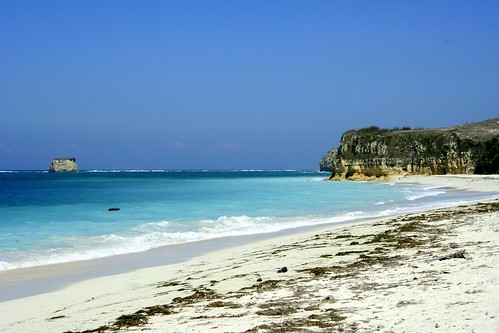
My list of fabulous beaches in Lombok Timor just keeps on getting longer. My newest addition is Kaliantan. Last month, I visited this sleepy village and I am awed by the vistas it offers, which to me are as impressive as its neighbor Sumerang.

While the much more crowded villages of Sumerang and Serewe (or Seriwe) are not identified in commercial maps, Kaliantan is often identified.

It is difficult to explain this anomaly. Perhaps Kaliantan was originally more populous. It appears to be less peopled now as seaweed cultivation has attracted more and more farmers to Sumerang and Serewe which are more sheltered from the wind.

Kaliantan could be the older village and is most probably the cultural center of the bay. After all, it is one of the few places which hold the annual Bau Nyale Festival which celebrates a local Sasak legend involving sea worms.

more on this festival soon


Kaliantan
Canon EOS 350D Digital, 1/250s, f/14, 55mm, ISO 100, -1/3EV
the beach at Kaliantan, East Lombok, Indonesia


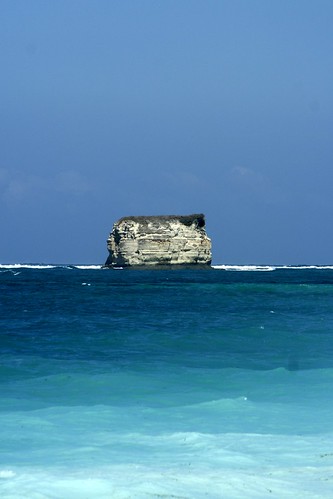
all the blues in the world
Canon EOS 350D Digital, 1/500s, f/20, 205mm, ISO 100, -1/3EV
a view from Kaliantan beach, East Lombok, Nusa Tenggara Barat, Indonesia


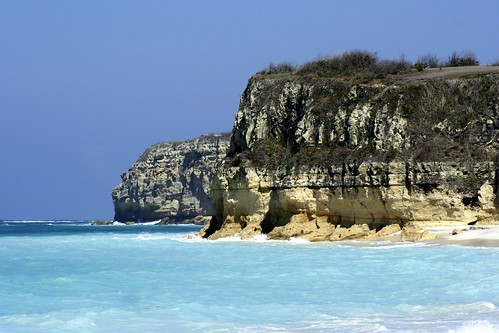
cliffs of Kaliantan
Canon EOS 350D Digital, 1/500s, f/20, 170mm, ISO 100, -1/3EV
a cliff by Kaliantan beach, East Lombok, Nusa Tenggara Barat, Indonesia


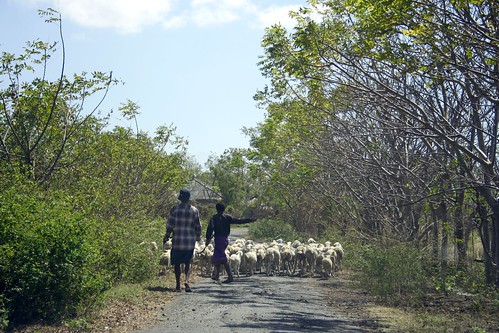
Kaliantan sheep
Canon EOS 350D Digital, 1/640s, f/5.6, 55mm, ISO 100, -1/3EV
villagers herding sheep by the road at Kaliantan, East Lombok, Nusa Tenggara Barat, Indonesia


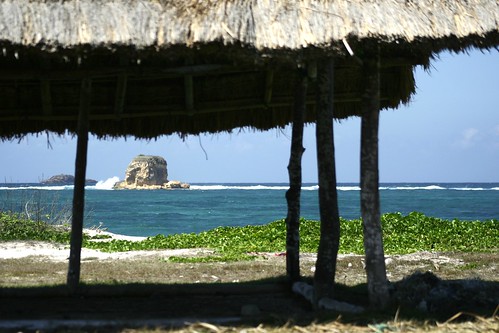
a peek
Canon EOS 350D Digital, 1/2000s, f/4.5, 90mm, ISO 100, -1/3EV
a village shed by the road at Kaliantan, East Lombok, Nusa Tenggara Barat, Indonesia

Stumble Upon Toolbar

Saturday, August 30, 2008

Macro studies of Balinese art

I really should quit being lazy and use my macro lens more. A few months ago I ordered a 100mm f2.8 macro lens from b&h online and had my sister mail it to Cebu. It was specifically to photograph my daughter Cacing. A good buy I say. Nowadays, whenever I travel, I bring it with me but always, I use it mostly for portraiture or as an all around lens.

Seldom have I used it for real 1:1 macro shots that it was designed for. Not a lot of bokeh shots I confess. I have never been a flower person anyway. I just could not drum up enough enthusiasm to experiment on nature shots.

Anyway, one early August morning, and I think it was the day I left Bali, I found myself running out of stuff to shoot. I was in my hotel, the popular Nikko Bali Resort and Spa, and the sunrise bailed out once more on me. Weather was plain downcast. Right then and there, I decided I might as well try macros as the hotel was full of Balinese objets d’art. I had my tripod with me and I was not shy setting it up in the most incongruous of places- the lobby, the elevator landing, the gallery.

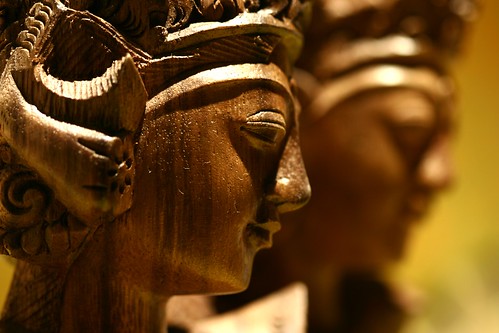
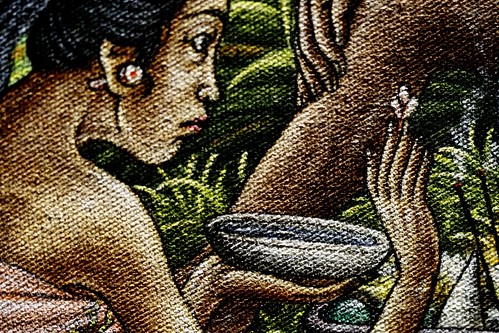
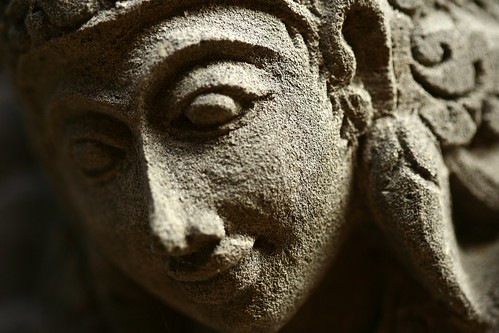
For subjects, I chose a Balinese doll, a banten decoration made from dried leaves and wood shavings, a wood carving of Rama and Sita, a traditional painting and a stone relief. Notes are provided.

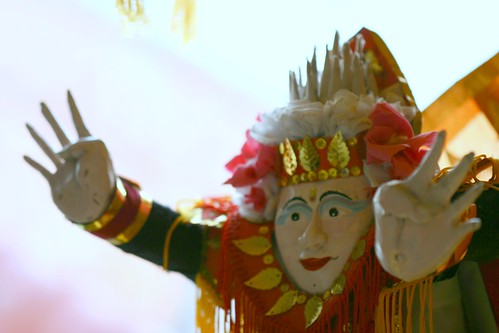
Bali doll
Canon EOS 350D Digital, 1/2s, f/2.8, 100mm, ISO 100, +1/3EV
a doll at Nikko Bali Resort and Spa, Nusa Dua, Bali, Indonesia
phototip: Against a strong backlight which can blow up the details, use the proper exposure compensation.


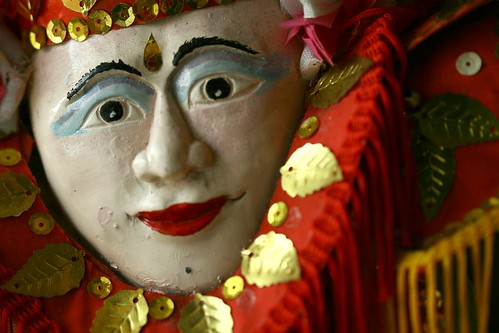
mata
Canon EOS 350D Digital, 1/15s, f/2.8, 100mm, ISO 100, -1.0EV
a doll at Nikko Bali Resort and Spa, Nusa Dua, Bali, Indonesia
phototip: Better still, if it is possible, turn the subject toward the light. A little turn changed the lighting dynamics and allows the details of the face to come out.


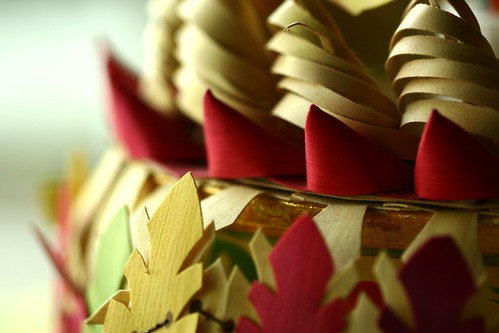
banten
Canon EOS 350D Digital, 1/13s, f/2.8, 100mm, ISO 100, -1.0EV
a banten decor at Nikko Bali Resort and Spa, Nusa Dua, Bali, Indonesia
phototip: Focus on a point that is off center to provide better visual dynamic appeal.


Sita and Rama
Canon EOS 350D Digital, 1/6s, f/2.8, 100mm, ISO 100, -1.0EV
wood carving of Rama and Sita at Nikko Bali Resort and Spa, Nusa Dua, Bali, Indonesia
phototip: I set off Sita’s soft features against the masculine profile of Rama for high contrast.


Bali painting
Canon EOS 350D Digital, 1/4s, f/2.8, 100mm, ISO 100, -1/3EV
part of a painting signed by I Kt Kerus, Nikko Bali Resort and Spa, Nusa Dua, Bali, Indonesia
phototip: Keep the plane of field parallel with the canvas when shooting flat surfaces.


stone relief
Canon EOS 350D Digital, 1/60s, f/2.8, 100mm, ISO 100
black sandstone relief, Nusa Dua, Bali, Indonesia
phototip: In shooting faces, keep the focus on the eyes.

Stumble Upon Toolbar

Friday, August 29, 2008

Gunung Agung, part 1

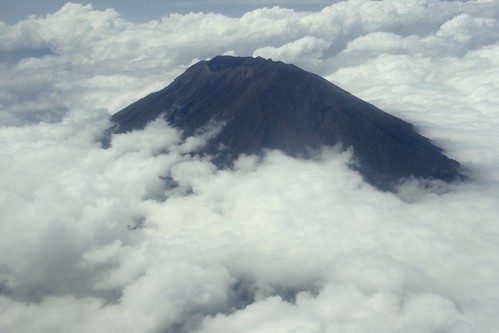
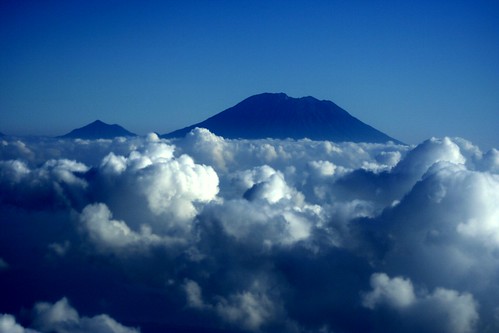
The highest peak of Bali, Gunung Agung, is most revered. The Balinese collectively believe in its mystical power. It is so central to the Balinese Hindu religion that the island’s holiest temple, Besakih, is nestled almost a thousand meters up its slope.

At about 3,142 meters above sea level, Gunung Agung is an active volcano noted for its deadly rumblings. The last major eruption in 1963 claimed more than a thousand people and destroyed several villages.

From afar, the mountain is beautifully symmetrical and conical in shape. Up close though, one can easily see the jagged caldera at its apex.

lost in the clouds
Canon EOS 350D Digital, 1/500s, f/10, 42mm, ISO 200, -1/3EV
Sept 14, 2006, 10:24AM, as seen from a plane


I think most flights going into Bali would afford a view of this majestic mountain although it would take some luck to get a window seat at the side of the plane that would face the mountain. From above, the moment the peak appears out of nowhere from a sea of white clouds is a cause for joy.

Gunung Agung aerial
Canon EOS 350D Digital, 1/3200s, f/4.5, 75mm, ISO 100
August 3, 2008, 8:08AM, as seen from a plane


sunset over Agung
Canon EOS 350D Digital, 1/200s, f/5.6, 75mm, ISO 100, -1/3EV
August 23, 2007, 6:11PM sunset, as seen from a plane


Gunung Agung is a popular photographic subject. It is famous for its sunrise silhouette when viewed from East Java. For Agung sunset scenes, one has to go west of course, to Lombok.

Gunung Agung
Canon EOS 350D Digital, 25s, f/13, 45mm, ISO 100, +2/3EV
August 1, 2008, 6:41PM, as seen from Gili Trawangan, Lombok, Indonesia


to be continued

Stumble Upon Toolbar

Wednesday, August 27, 2008

Pasar Badung, part 1

I’ve always been fascinated by public markets. They are a generous window to the psyche of the people. Markets throbs of teeming humanity- crowded, noisy, smelly and flashy. Now imagine that the market is Pasar Badung, the city is Denpasar and the island is Bali.

In the last 15 years, I have visited or shopped at Pasar Badung several times. Reasons were mundane. I would not even want to recall what pedestrian items I was buying. This time however, I went there with another mind set. I brought my camera. Difficult it may be but I wanted to present in photographs the cacophonous sounds, the heady aroma and the clashing colors that unabashedly are Bali.

As in most markets in Southeast Asia, Pasar Badung is a hive of commerce all day long. However, it is busiest late in the afternoon stretching into the night. I was there at 3PM, a bit too early. The courtyards around the building were just starting to fill up with vendors setting up their stalls.
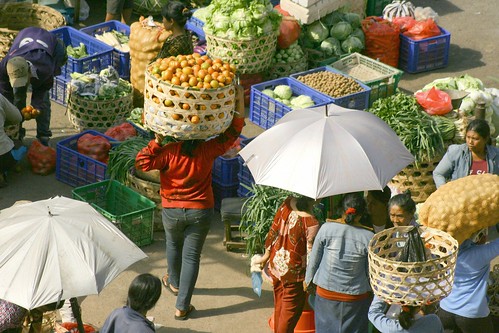
pasar badung
Canon EOS 350D Digital, 1/4000s, f/5.6, 155mm, ISO 400, -1.0EV
fresh produce at the Pasar Badung, Denpasar, Bali, Indonesia


We wandered around the four storeys of the building but most animated are the activities outside, in the open areas, and not inside.

There are lots of things to preoccupy me at Pasar Badung. But a market experience would not be complete without sampling local goodies. My friend sought out the local ice sundae. I sampled it too and it was appropriately sweet, replete with fruits and local homemade condiments.
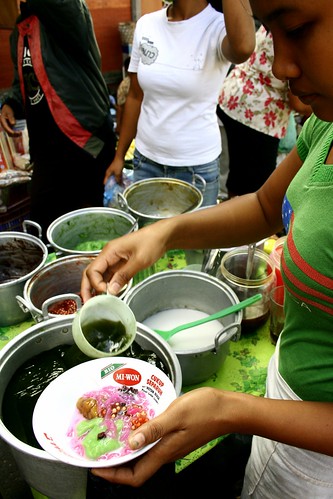
local ice sundae
Canon EOS 350D Digital, 1/200s, f/5.6, 18mm, ISO 400, +1/3EV
local ice sundae at the Pasar Badung, Denpasar, Bali, Indonesia


I preferred fruits though. I was looking for mangga manalagi but this terribly sweet mango variety is more common in Central Java. The Balinese version, the mangga harum manis (literally “sweet aroma”), was the one in season, so we gladly bought some. Price was cheap and was ¼ of the tag in supermarkets.
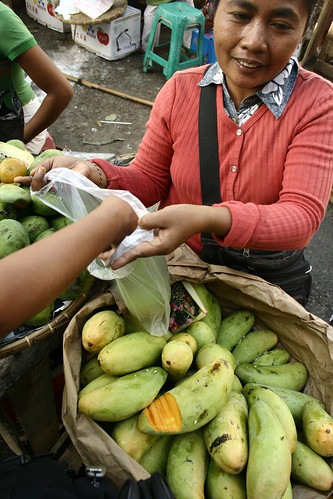
mangga harum manis
Canon EOS 350D Digital, 1/80s, f/5.6, 18mm, ISO 200
buying mangga harum manis (“sweet aroma” mango) at the Pasar Badung, Denpasar, Bali, Indonesia


As I roamed around the fresh produce section, I found myself gravitating towards my favorite vegetables: chillies. Plump and ripe, they screamed for attention. They are always highly photogenic. Eagerly, I tried to capture two varieties of lombok peppers in one frame to maximize the contrast of the deep red and the yellow orange.
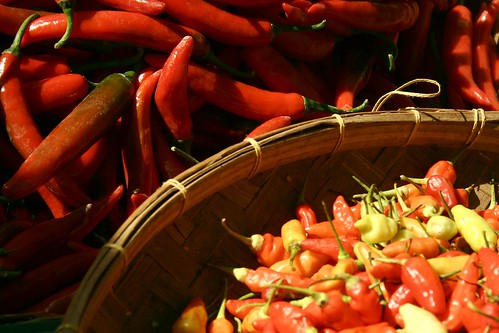
red vs orange
Canon EOS 350D Digital, 1/1250s, f/5.6, 51mm, ISO 200, -1/3EV
varieties of lombok pepper at the Pasar Badung, Denpasar, Bali, Indonesia

Another particularly interesting and unique in Bali markets is the canang section. These are the offerings that every Balinese household offer without fail early in the morning and late in the afternoon at their altars, places of work or just about any place of consequence. Literally millions of these tiny cradles of flowers and food are offered and dispensed with on a daily basis so the commerce of flower petals, the preferred ingredient, is brisk everywhere.
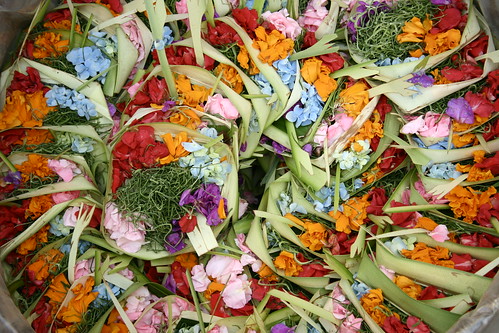
canang swirl
Canon EOS 350D Digital, 1/160s, f/5.6, 55mm, ISO 400, +1/3EV
canang offerings for sale at the Pasar Badung, Denpasar, Bali, Indonesia
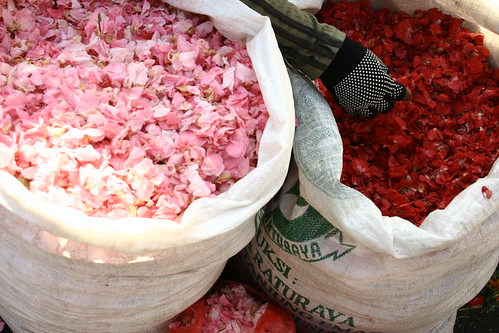

petals by sacks
Canon EOS 350D Digital, 1/125s, f/5.6, 30mm, ISO 100, +4/3EV
rose petals by sackfuls at the Pasar Badung, Denpasar, Bali, Indonesia

The flowers are cultivated in massive scale in the highlands of Bali so they actually are reasonably cheap. Moreover, you would be hardpressed to see places where petals, in mind-boggling colors, are displayed by sackfuls. Color mad, the Balinese are.

Stumble Upon Toolbar

Sunday, August 24, 2008

the Cacing Diaries #15

The biggest Cacing news is that she gave up on her milk (the brand is Nan). According to my wife and nanny who tasted promptly the old formula, it was too bland in taste and smell. Cacing probably got bored! Suddenly, she just gave up and decided to drink less than half the number of bottles she used to consume. Like a curve ball that hits you hard, this sent us into a mild panic.

Good thing that Nitzi, my ever knowledgeable friend who recommended Nan milk the last time that we had to replace Cacing’s old formula Similac (see diary entry #4), suggested that we try Promil Gold (stage 2). The new formula worked like a charm. It must be the combination of more sugar and a more pronounced sweet smell.

So normalcy is restored.

This early, everyone can tell that Cacing has taken the gene of “slight frame” from me and my wife. Like us when we were infants, she is on the low end of the weight scale. She simply does not eat or drink enough to be the typical cute fat kid. While she munches on every solid food we give her, we know that at her young age only milk can give her enough calories to get more heft and bulk.

Just like our own personal science project, we are doing the best we could egging Cacing to drink more, eat more and sleep more. Yet wherever and whenever, Cacing is a firebrand who is just too active, too talkative and too feisty. We can only dream on!


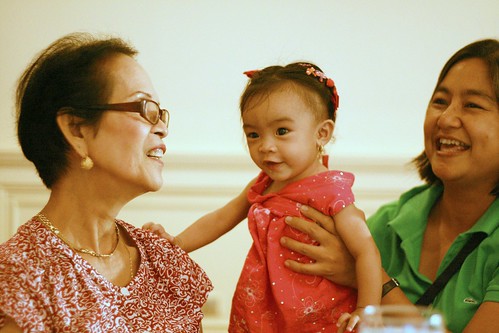
face off
Canon EOS 350D Digital, 1/100s, f/1.8, 50mm, ISO 16000, +1/3EV
My mom and Cacing facing off at a wedding reception. Carrying Cacing is my friend Dara. at Vistamar, Lapu-Lapu City, Cebu, the Philippines


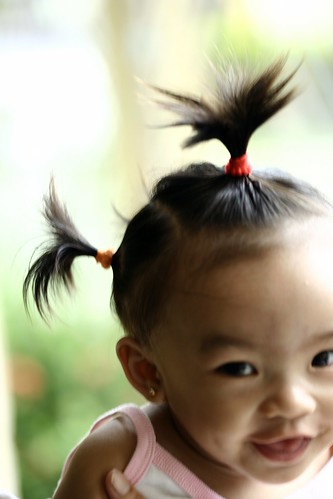
taming the mohawk
Canon EOS 350D Digital, 1/200s, f/2.8, 100mm, ISO 200, -1.0EV
Cacing actually had 4 pony tails here. The 4th one at the back of her head cannot be seen in this view. at home, Cebu City, the Philippines


out of frame
Canon EOS 350D Digital, 1/30s, f/2.8, 100mm, ISO 100, -1.0EV
Cacing flashed her killer smile here but she moved out of the frame and focus. at home, Cebu City, the Philippines


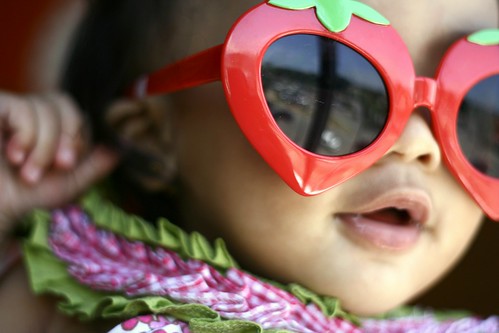
channeling Jackie O

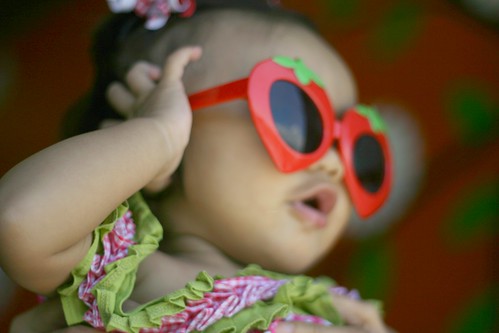
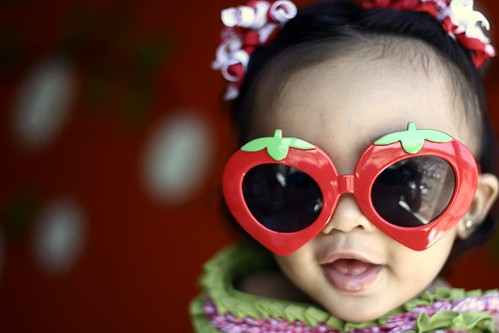
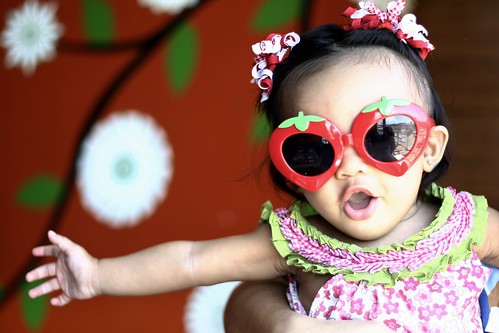
Today, I could not help but post pictures of Cacing in her Jackie O moments. The strawberry shades are a gift from my sister in NY and it is her first time wearing them. She doesn’t mind them at all. In fact, the challenge in photographing her was not that she wanted to take them off but that as always, she doesn’t want to look at me. Instead she took a liking to the table she was sitting on, trying to feel the shiny surface with her hands. It took me time to get into her good graces and she did not fail to emote.

Jackie O
Canon EOS 350D Digital, 1/640s, f/1.8, 50mm, ISO 100
at Lai Garden Restaurant, the North Wing of SM, Cebu City, the Philippines


Admittedly, taking pictures of my daughter is never easy and I can say it must be the same with others who have kids her age. They simply do not understand verbal instructions so the best I could do, and this I would recommend to others, is to be patient and be prepared to click as the next move could be the best pose yet.

check me out
Canon EOS 350D Digital, 1/2000s, f/1.8, 50mm, ISO 100, -1/3EV
at Lai Garden Restaurant, the North Wing of SM, Cebu City, the Philippines


strawberry shades
Canon EOS 350D Digital, 1/400s, f/1.8, 50mm, ISO 100, -1/3EV
at Lai Garden Restaurant, the North Wing of SM, Cebu City, the Philippines


I wanna be free
Canon EOS 350D Digital, 1/160s, f/1.8, 50mm, ISO 100, +2/3EV
at Lai Garden Restaurant, the North Wing of SM, Cebu City, the Philippines

Stumble Upon Toolbar

Saturday, August 23, 2008

Cidomo- Lombok’s horse-drawn cart

The horse is a beast of burden utilized for human and cargo transport for centuries. Different societies have various horse-driven carts but ever since the invention of the car, they have become obsolescent. While images of royal carriages, Western stagecoaches or old frontier wagons are still indelibly etched in the modern mind, they are paraded only in ceremonial affairs, touted as leisurely promenades for tourists or displayed as relics in museums.

In the Philippines, the horse carts, invariably called as the calesa, tartanilla or caratela, have also become rare, having been relegated in the most far-flung nooks in the countryside. The same is true in Indonesia. Bali’s version, the dokar is mostly for curious foreigners nowadays and Java’s andong or the delman are being pushed more and more into rural areas.

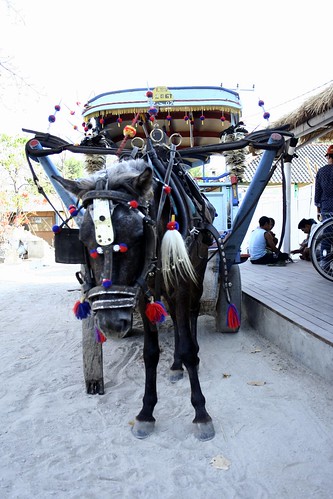
In the island of Lombok, there is one particularly unique variation, the cidomo, which remains highly popular. It is all over the towns, even in the islets as a means of public transportation.

Cidomo is a contraction from three words:

CI, for cikar, a traditional handcart
DO, for dokar, a pony cart
MO, for mobil, or sometimes montor, the car

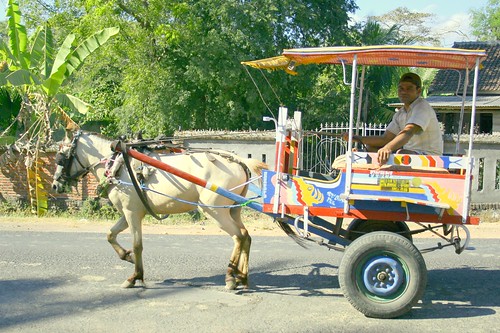
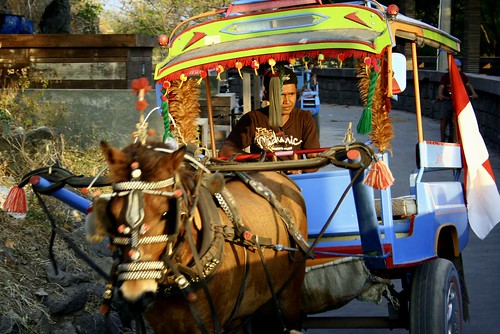
The unique thing with the cidomo is that the cart uses car wheels instead of the regular wooden spoked wheels. Obviously, the preference was born of practicality as probably, automobile wheels, albeit expensive than wooden wheels, are longer lasting and easier to procure. Whatever the reasons are, the cidomo remains popular in Lombok, especially in routes which the public utility bemoh (vans) or bis (buses) do not ply.

Keruak cidomo
Canon EOS 350D Digital, 1/800s, f/4.0, 27mm, ISO 100, +1/3EV
Keruak, Lombok Timor, Nusa Tenggara Barat, Indonesia


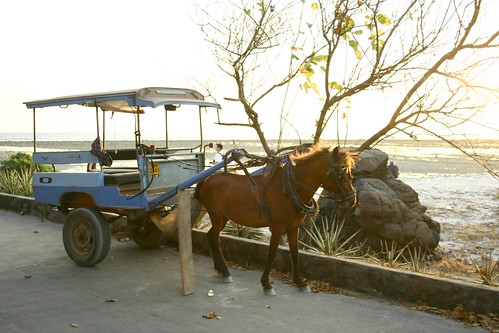
The cidomo design is basic. Seats are arranged sideways. While they are often padded, they are not the most ergonomic in comfort. To put more load on the wheels, the cart is made to actually tilt slightly at the rear so the cart jiggles. Most first-timers get unnerved when getting on and off. A see-saw balance is not one thing we practice a lot in everyday life.

Gili Trawangan cidomo
Canon EOS 350D Digital, 1/100s, f/3.5, 22mm, ISO 100
Gili Trawangan, Lombok, Nusa Tenggara Barat, Indonesia


Modernization, howevery, is creeping up. Already, in Mataram, Lombok’s capital city, the cidomo’s routes have been curtailed from the main hi-ways as they slow down vehicular traffic and pose as safety hazards.

Sunset Bar cidomo
Canon EOS 350D Digital, 1/80s, f/4.0, 22mm, ISO 100, +1.0EV
a “parked” cidomo at Gili Trawangan, Lombok, Nusa Tenggara Barat, Indonesia


Meantime, cidomo continues to be a charming way to get around. Think of bells chiming with the gallops, bright painted patterns competing with yarn bonbons and tassels, and well, some malodorous poop dropping here and there. This is what local color (or smell) should be- raw, earthy and memorable.

cidomo
Canon EOS 350D Digital, 1/80s, f/5.6, 55mm, ISO 100
Gili Trawangan, Lombok, Nusa Tenggara Barat, Indonesia

Stumble Upon Toolbar